
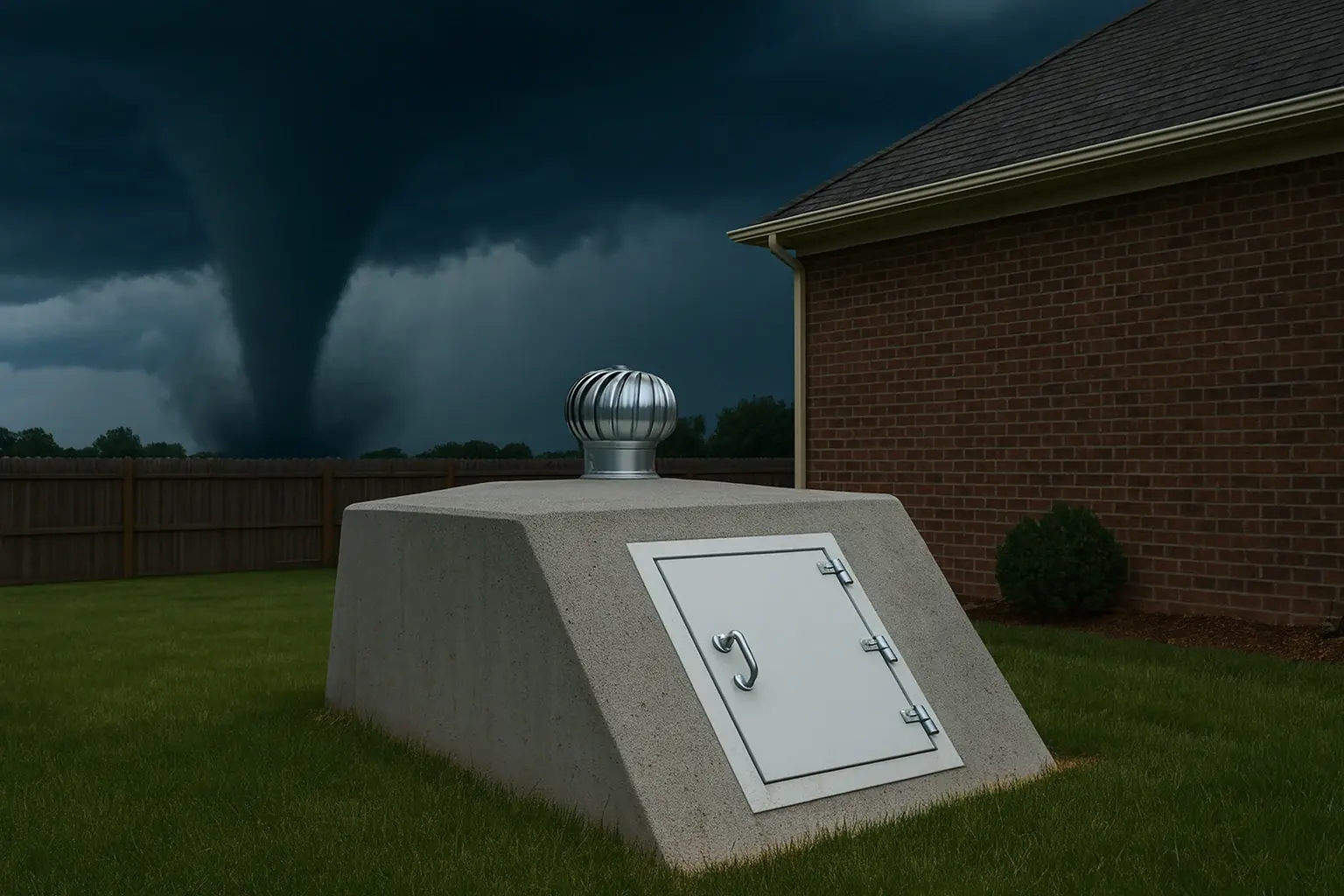
Deciding to install a storm shelter is a significant step toward protecting your family. Understanding what happens during the installation process helps you prepare your property, plan your schedule, and know what to expect at each stage. This guide walks through the complete storm shelter installation process for Huntsville area homes, from initial consultation through final inspection.
Overview: How Long Does Installation Take?
For most residential storm shelter installations in Huntsville, the actual installation work takes 1-2 days. However, the complete project timeline from initial contact to a fully operational shelter is typically 2-4 weeks.
Timeline breakdown:
- Initial consultation and site assessment: 1-2 days
- Quote review and decision: Your timeline
- Permit application and approval: 3-10 business days
- Scheduling and preparation: 1-5 days
- Installation: 1-2 days
- Final inspection: 1-3 days
- Total: Approximately 2-4 weeks
During peak tornado season (March-May), installation schedules fill quickly. Planning ahead ensures you’re protected before severe weather arrives.
Step 1: Permit Process in Madison County
Building permits are required for storm shelter installation throughout the Greater Huntsville area. The permit process ensures your shelter meets local building codes and FEMA requirements.
City of Huntsville Permits
The Huntsville Inspection Services Department handles storm shelter permits within city limits:
What’s required:
- Completed permit application
- Site plan showing shelter location
- Shelter specifications and engineering documentation
- Contractor licensing verification
- Permit fee (contract price × 0.0055, typically $25-$50 for residential shelters)
Processing time: Typically 3-5 business days for standard residential shelters. Complex projects or custom designs may require additional review.
Inspections required:
- Pre-installation site verification
- Foundation/anchoring inspection
- Final completion inspection
Madison County Permits
For properties outside city limits, Madison County Inspection Department handles permits:
Requirements: Similar to Huntsville—application, site plan, specifications, contractor verification
Permit fees: $75-$125 depending on project scope
Processing time: 3-7 business days
City of Madison Permits
Properties within Madison city limits require permits through Madison Building Department:
Processing time: 3-5 business days
Fee structure: $100-$150 for residential storm shelters
What Your Installer Handles
Professional installers typically manage the entire permit process:
- Completing application paperwork
- Providing required documentation
- Paying permit fees (included in quoted price)
- Scheduling required inspections
- Coordinating with inspectors
This removes administrative burden from homeowners and ensures permits are filed correctly the first time.
Step 2: Site Preparation
Before installation day, several preparation steps ensure smooth execution.
Utility Line Location
Alabama law requires calling 811 at least two working days before any excavation (not counting the day of notification). This free service marks underground utility lines to prevent dangerous damage during digging.
Utilities marked include:
- Natural gas lines
- Electrical cables
- Water mains
- Sewer lines
- Cable and telephone lines
- Fiber optic lines
Your installer coordinates the 811 call and schedules installation after utilities are marked. In most cases, residential storm shelter locations avoid utility conflicts, but knowing exact locations prevents accidents.
Utility Line Considerations
Sometimes utility lines run through the preferred shelter location. Options include:
Relocation: Moving utility lines is possible but adds cost ($200-$800 depending on utility type) and time (additional 1-2 weeks for utility company scheduling).
Alternative location: Often, adjusting shelter placement by a few feet avoids utility conflicts entirely.
Above-ground alternative: If underground installation is complicated by utilities, above-ground shelters eliminate excavation concerns.
Your installer identifies any utility issues during the site assessment and discusses options before you commit.
Access Preparation
Installation equipment needs access to your shelter location:
Underground shelters require:
- Mini-excavator access (typically 36” minimum width)
- Crane or boom truck access for shelter placement
- Clear path from street to installation site
Above-ground shelters require:
- Forklift or crane access
- Level concrete surface for installation
- Garage door clearance for interior installations
Homeowner preparation:
- Move vehicles from installation area
- Clear obstacles from access paths
- Ensure gate openings (if applicable) accommodate equipment
- Coordinate pet containment during installation
Step 3: Installation Day
The actual installation process varies by shelter type but follows predictable patterns.
Underground Shelter Installation
Morning (Day 1):
- Equipment arrival and setup
- Final utility line verification
- Excavation begins (garage floor cutting or yard excavation)
- Hole preparation to proper depth and dimensions
Afternoon (Day 1):
- Shelter unit delivery and crane positioning
- Shelter placement into excavation
- Initial leveling and positioning
- Backfill begins around shelter
Day 2 (if needed):
- Complete backfill and compaction
- Concrete work for garage floor restoration
- Access steps or ladder installation
- Door adjustment and hardware completion
- Electrical connections (lighting, ventilation)
- Site cleanup
Above-Ground Shelter Installation
Above-ground installations typically complete in a single day:
Morning:
- Shelter delivery
- Positioning within garage or designated location
- Anchor bolt layout and drilling
Afternoon:
- Anchor installation (concrete anchors to slab)
- Final positioning and leveling
- Door adjustment and hardware installation
- Electrical connections if applicable
- Cleanup and debris removal
What to Expect During Installation
Noise and disruption:
- Excavation equipment is loud (underground installations)
- Concrete cutting creates dust (garage floor installations)
- Crane operation requires temporary street or driveway access
- Overall noise levels similar to typical construction
Duration on site:
- Crew typically arrives 7-8 AM
- Underground installations: 8-10 hours per day
- Above-ground installations: 4-6 hours total
- Cleanup completed before crew leaves
Your involvement:
- Available for questions if needed
- Keep pets and children away from work area
- Final walkthrough at completion
Step 4: Inspection and Completion
After installation, required inspections verify proper work.
What Inspectors Check
Anchoring verification:
- Proper anchor bolt installation
- Connection to foundation meets specifications
- No gaps or voids beneath shelter
Structural inspection:
- Shelter positioned correctly
- No damage from installation
- Door operates properly
- Ventilation functional
Electrical inspection (if applicable):
- Lighting properly wired
- Ventilation fans operational
- GFCI protection where required
Passing Inspection
Professional installers rarely fail inspections because they know local requirements. If any issues arise, your installer corrects them and reschedules inspection at no additional cost.
Final Walkthrough
Before considering the project complete, your installer should provide:
Demonstration:
- Door operation and locking
- Emergency release mechanisms
- Interior lighting operation
- Ventilation controls
Documentation:
- Manufacturer warranty registration
- Installation warranty information
- Permit closure documentation
- Maintenance recommendations
Claiming Your Alabama Tax Credit
Don’t forget this important step! Alabama homeowners can claim a state income tax credit of up to $3,000 (or 50% of installation costs, whichever is less) for FEMA-compliant storm shelters. This credit is available through the 2028 tax year.
Documents to save for your tax credit:
- Installation receipt/invoice showing total cost
- Proof of FEMA compliance (manufacturer certification)
- Permit and inspection documentation
- Photos of completed installation
How to claim:
- Submit documentation to AEMA for verification
- Receive a tax credit certificate from AEMA
- Claim the credit on your Alabama state income tax return
Contact AEMA at (205) 280-2200 or sheltertaxcredit@ema.alabama.gov for details. This is a guaranteed credit—unlike FEMA grants, you don’t need to wait for a disaster declaration.
Emergency preparedness review:
- How many people the shelter accommodates
- Recommended emergency supplies
- Weather alert notification options
- Family emergency plan discussion
Preparing Your Family
Installation completion is just the beginning of storm shelter ownership.
Emergency Supplies to Stock
Keep these items in or near your shelter:
- Flashlights with fresh batteries
- Battery-powered weather radio
- First aid kit
- Bottled water
- Phone charger (battery-powered)
- Medications family members need
- Comfort items for children
Family Communication Plan
Everyone in your household should know:
- Where the shelter is located
- How to open and secure the door
- What to do when warnings sound (even at night)
- How to operate emergency lighting
- Who to contact after severe weather passes
Regular Maintenance
Storm shelters require minimal maintenance:
Monthly:
- Test door operation
- Check flashlight batteries
- Verify supplies are fresh
Annually:
- Inspect door seals
- Check anchoring for any issues
- Clean interior
- Test ventilation systems
After severe weather:
- Inspect exterior for damage
- Check drainage around shelter
- Verify door operation
Scheduling Your Installation
The best time to install a storm shelter is before you need it. Consider these timing factors:
Seasonal Considerations
Winter (December-February): Shortest wait times, flexible scheduling, comfortable installation weather. Complete before spring tornado season.
Spring (March-May): Peak demand means longer waits. If tornado season has started, you may be waiting during the highest-risk months.
Summer (June-August): Moderate demand. Hot weather can slow outdoor work but availability is good.
Fall (September-November): Good availability. Complete before secondary tornado season in November.
How to Get Started
Contact us for a free consultation: We’ll discuss your needs and answer initial questions.
Schedule a site assessment: We evaluate your property and recommend shelter options.
Review your quote: Detailed pricing for your specific installation.
Make your decision: Choose the shelter that fits your needs and budget.
We handle the rest: Permits, scheduling, installation, and inspection.
Don’t wait for tornado warnings to wish you had protection. The installation process is straightforward, professional crews handle the technical work, and in 2-4 weeks your family can have permanent storm protection.
Contact Huntsville Storm Shelters today to schedule your free site assessment. We’re ready to help protect your family.
Pricing Disclaimer: Cost estimates and permit fees mentioned in this article are for informational purposes only. Actual costs may vary based on specific project requirements, site conditions, and contractor rates. Contact us for an accurate quote.